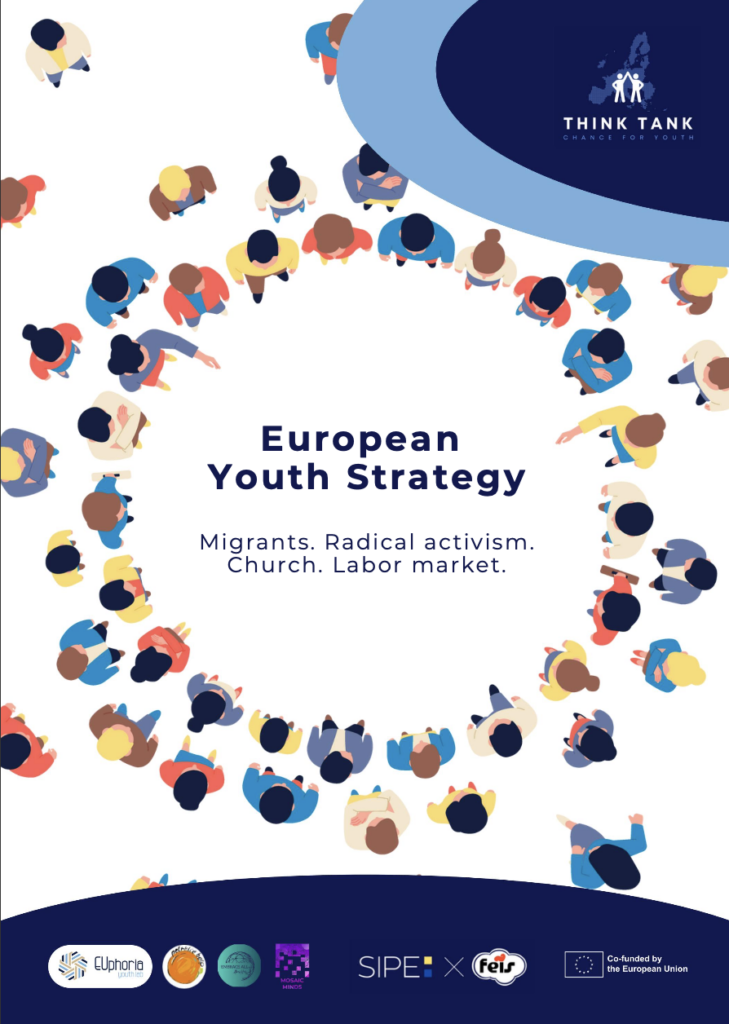
The creation of the “European Youth Strategy” by the combined efforts of three youth think tanks—SIPE (Poland), Mosaic Minds (Czech Republic), and EUphoria Youth Lab (Greece)—is a testament to the importance of international collaboration among young leaders. Over months of collaboration, these teams, brought together by the “Think Tank – Chance for Youth” project, engaged in rigorous research, dialogue, and shared analysis. Their work reflects an intersection of diverse national perspectives and regional insights on key issues impacting European youth today.
Transnational cooperation
Working together in these international teams allowed members to develop a richer, more holistic understanding of each challenge. For example, integrating migrant populations in education and the labor market requires nuanced strategies that vary by country but can benefit from a collective European approach. Similarly, analyzing youth employment barriers across Poland, the Czech Republic, and Greece highlights specific national economic hurdles and provides a common framework for proposing impactful, targeted recommendations.
This transnational cooperation underscores the power of youth in fostering inclusivity and creating informed policy recommendations that resonate across borders. It amplifies youth voices in shaping policy discussions and calls on decision-makers to consider fresh, cross-cultural perspectives as a means to address persistent challenges facing European societies. Through this collaborative strategy, the think tanks have demonstrated how collective insights from diverse regions can lead to a robust, comprehensive strategy aimed at building a more inclusive and empowered Europe for young people.
The publication
The publication titled “European Youth Strategy” provides an in-depth analysis of crucial issues impacting European youth, including migrant inclusion, youth employment challenges, social exclusion, and the influence of radical climate activism. Each section of the publication reflects both the unique challenges and common concerns across these regions, offering a truly European perspective on each topic.
Specific themes
The publication is structured to address specific themes that were identified by youth leaders from each country as critical to the future of Europe’s younger generations. For instance, it explores the integration of migrants in educational and professional settings across Poland, Greece, and the Czech Republic, comparing local challenges and successes to create a roadmap for more inclusive policies. Another section examines the shrinking job market opportunities for youth, providing both statistical insights and suggested initiatives to increase accessibility and fair treatment within the labor force.
Notably, this publication moves beyond merely identifying problems; it aims to engage policymakers, educators, NGOs, and community leaders with concrete, actionable recommendations. By sourcing data from Eurostat, national statistical bodies, and on-the-ground research, the document is positioned as an evidence-based guide, drawing connections between social inclusion, economic opportunity, and environmental sustainability as interconnected aspects of a healthier, more inclusive Europe.
Through “European Youth Strategy,” the youth think tanks invite European leaders to view these challenges through a youth-centric lens and to take bold, unified action that prioritizes long-term social cohesion, economic resilience, and environmental responsibility. This publication thus stands as both a research document and a call to action, emphasizing the critical role of youth perspectives in shaping an inclusive and sustainable European future
Link to the publication: https://issuu.com/feisfundacja/docs/new_strategy-2